





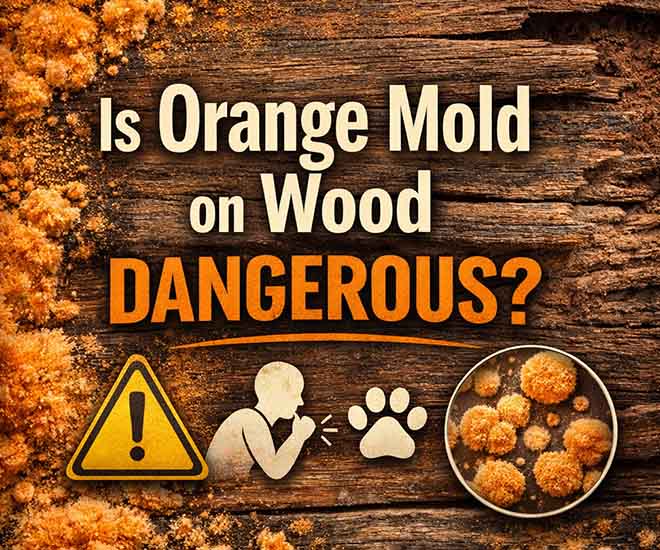
Yes, is the straight answer of the question “Is orange mold on wood dangerous” Additionally, this mold releases airborne spores. As a result, these spores may cause allergic reactions, respiratory problems such as coughing and wheezing, eye or skin irritation, headaches, and fatigue. Moreover, if anyone experiences prolonged exposure, which can be more serious for children, pets, the elderly, and people with weakened immune systems. Hence, addressing the moisture issues promptly and removing the mold properly is essential to protect both health and property.
Is Orange Mold on Wood Dangerous?
Orange mold on wood can be dangerous because wood is a porous material. To simplify, once moisture is present, mold does not just sit on the surface of the wood. Instead, the mold penetrates deep into the wood fibers. Eventually, as it grows, it releases microscopic spores into the air. These microscopic spores can negatively affect indoor air quality. Consequently, these spores trigger health symptoms, especially in enclosed indoor spaces.
Indeed, orange mold is not always as toxic as black mold. However, no one should ever ignore the orange mold. Over time, it can weaken wooden structures and increase health risks for occupants.
What Is Orange Mold?
Certainly, “Orange mold” is a general term used to describe several types of fungi that appear orange, pinkish, or rust-colored. Common examples include Aureobasidium, Fusarium, and certain slime molds. Some orange mold-like growths may also be bacterial or yeast-based.
Importantly, you should understand that appearance alone cannot identify the exact species or toxicity level. Therefore, any orange growth on wood should be treated as a potential health concern until properly assessed.
Health Risks of Orange Mold on Wood
Orange mold is dangerous to humans when spores are inhaled or come into contact with skin, especially indoors. Many homeowners ask, “Is orange mold dangerous to humans? Indeed, the answer is yes. Certainly, this become more dangerous with prolonged exposure in an orange mold, affected house.
Additionally, people’s exposure to orange mold spores can lead to a range of health problems, particularly when exposure is repeated or prolonged.
Allergic Reactions
- Sneezing and a runny nose
- Itchy or watery eyes
- Skin rashes or irritation
Respiratory Issues
- Persistent coughing
- Wheezing
- Asthma flare-ups
- Shortness of breath
- Throat irritation
Other Symptoms
- Headaches
- Fatigue
- Sinus pressure or congestion
Vulnerable Groups at Higher Risk
- Children
- Elderly adults
- Pets (especially dogs)
- Individuals with weakened immune systems
Several people specifically ask this question: “Is orange mold on wood dangerous to dogs?” We are well aware that dogs are closer to the ground. Thus, they may inhale more spores, lick contaminated surfaces, and develop respiratory issues. Moreover, dogs might suffer from skin irritation or lethargy.
Therefore, for people and animals in these groups, even moderate mold exposure can lead to more serious reactions or infections.
Why Orange Mold Grows on Wood
Clearly, we know that mold thrives on organic materials like wood. The reason is that wood contains cellulose, which serves as a food source for mold. As a result, when anyone neglects that wood remains damp due to leaks, condensation, high humidity, or poor ventilation, orange mold can grow rapidly.
Common causes include:
To make it simpler and easier to remember
- Roof or plumbing leaks
- High indoor humidity
- Condensation near windows or HVAC systems
- Flooding or water damage
- Poor airflow in bathrooms, basements, or crawl spaces
If anyone observes the presence of orange mold, then it often signals an underlying moisture problem. Surely, you must address this moisture issue promptly to prevent recurrence.
Is Orange Mold as Dangerous as Black Mold?
Orange mold is generally considered less toxic than black mold (Stachybotrys chartarum). However, this does not mean you start to take orange mold lightly or for granted. Indeed, orange mold can still cause significant allergic and respiratory symptoms. Also, this mold can damage wooden materials over time.
No doubt, not all orange mold species are equally toxic. Nevertheless, the visual appearance of mold alone cannot determine risk. Hence, proper identification and moisture control are crucial for safety.
How to Tell If Orange Mold Is a Serious Problem
Some orange mold appears as powdery orange mold, while other types look slimy or crusty. Not only that, powdery orange mold often releases spores easily. Therefore, this type of mold increases inhalation risk.
Orange mold may be a serious issue if:
- Mold keeps returning after cleaning.
- It covers a large surface area (never try DIY in such circumstances)
- There is a strong musty odor.
- Occupants experience ongoing health symptoms.
- The wood feels soft, crumbly, or damaged.
Importantly, these are some alarming signs that suggest hidden mold growth or more serious structural damage that requires professional attention.
How to Get Rid of Orange Mold on Wood
If you are searching for how to get rid of orange mold or how to get rid of orange mold on wood, follow these steps carefully.
Find the Moisture Source
You have promptly identified and fixed leaks. Also, control humidity and improve ventilation. Surely, neglected moisture control will help mold will always return.
Clean Small Areas Carefully
For small, surface-level mold patches, you can use DIY methods, but very carefully. Indeed, DIY solutions such as white vinegar or hydrogen peroxide can be effective. However, vinegar works better than bleach on porous wood. The reason is that vinegar penetrates deeper into the material.
Call Professionals for Large or Persistent Growth
Beware, if the mold you are dealing with covers large areas then never try any DIY resolution. Also, in case mold spreads quickly or causes health concerns, professional mold remediation is the safest option. Experts can remove mold safely and address hidden contamination.
Don’t Ignore It
Even if orange mold is not highly toxic, it damages wood and worsens indoor air quality over time. We already mentioned it before, delaying action can increase repair costs and health risks.
Orange Mold in Different Areas of the Home
Let’s find out in detail:
Orange Fungus on Wood Deck
This often happens with outdoor wooden decks easily. Simply, outdoor wood decks face rain exposure. Also, they deal with poor drainage. Therefore, they can develop orange fungus. No matter, outdoor exposure is usually less dangerous, but spores can still be tracked indoors.
Orange Mold on Wall
Orange mold on walls often indicates condensation or hidden leaks behind drywall and should be inspected promptly.
Orange Mold in House
Any homeowner who observes orange mold appearing in multiple rooms, it may widespread humidity or HVAC-related moisture issues. For that reason, you a require professional evaluation. Even if orange mold is not highly toxic, it damages wood and worsens indoor air quality over time. Hence, delaying action can increase repair costs and health risks.
Can You Prevent Orange Mold on Wood?
Yes. The prevention of orange mold focuses on moisture control:
- Keep indoor humidity below 50% (golden rule)
- Use exhaust fans in bathrooms and kitchens for proper ventilation
- Repair leaks promptly
- Ensure proper ventilation
- Dry wet wood immediately after water exposure
Certainly, preventing moisture is the most effective long-term defense against mold.
Frequently Asked Questions (People Also Ask)
Here we are entertaining the answers to the questions about orange mold that people often ask:
Is orange fungus on wood poisonous?
Orange fungus on wood is not always poisonous. However, this fungus can still cause allergic reactions, respiratory symptoms, and irritation. To simplify, toxicity depends on the species and exposure level.
How toxic is orange mold?
No doubt, orange mold is generally less toxic than black mold. Still, it doesn’t imply that it is harmless because it can still be harmful, especially for sensitive individuals and pets.
What causes orange mold on wood?
Orange mold on wood is caused by moisture from leaks. Also, this mold spread due to condensation, flooding, high humidity, or poor ventilation.
Can breathing in mold from an orange make you sick?
Breathing mold spores from rotting food or orange-colored mold can make you sick. For example, it can cause coughing, throat irritation, headaches, or allergic reactions in sensitive individuals.
Is orange mold on wood dangerous Reddit discussions accurate?
Reddit threads often suggest DIY cleaning methods, but they frequently underestimate hidden mold, health risks, and recurrence. Surely, small surface mold may be cleaned, but recurring or widespread mold requires professional remediation.
Conclusion
So, Is Orange Mold on Wood Dangerous? The clear answer is yes, especially when it’s ignored. Additionally, orange mold is a strong warning sign of excess moisture, compromised indoor air quality, and potential health risks for people and pets. Even when it looks minor, mold on wood often runs deeper than what’s visible on the surface, making DIY fixes unreliable in the long run. Moreover, if you want real peace of mind, professional assessment matters. Miami Mold Specialists provides expert mold inspections, testing, and full remediation services designed to eliminate mold at its source, not just hide it. By addressing both mold and moisture, their team helps protect your home, your health, and your property value before the problem gets worse.