




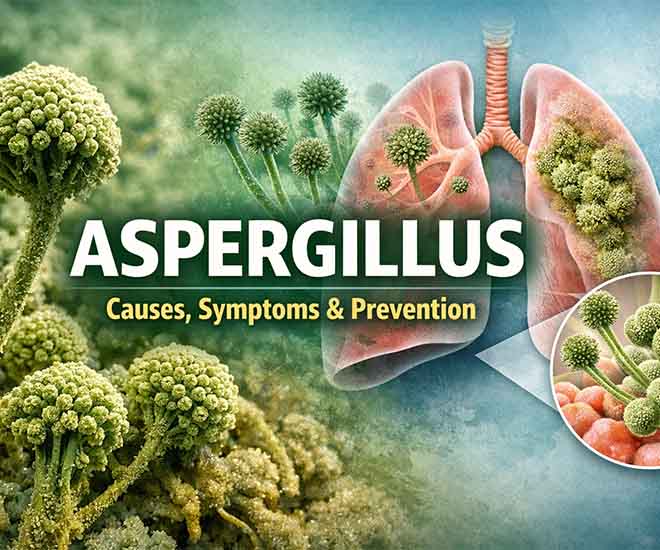
 What Is Aspergillus?
Aspergillus is a common genus of mold (fungus) found worldwide in both indoor and outdoor environments. Additionally, you will find it in soil, air, dust, food, water-damaged buildings, and damp areas of homes.
Most people breathe in Aspergillus spores daily without any health issues. However, those with weakened immune systems, existing lung disease, or heavy mold exposure may experience serious allergic reactions and infections. These conditions are collectively known as aspergillosis.
Aspergillus Pronunciation
Aspergillus pronunciation:
as-per-JIL-us (ˌæs pər ˈdʒɪl əs)
Aspergillus Species (Common Types)
Interestingly, it is very amusing that there are more than 300 Aspergillus species. However, a few species of Aspergillus are medically and environmentally significant. So, we are discussing these species below:
To explore all medically significant species in detail, see our complete breakdown of
different types of Aspergillus
Aspergillus fumigatus
- The most common cause of Aspergillus infection
- Type that primarily affects the lungs
- Highly dangerous for immunocompromised individuals
Aspergillus niger
- Commonly found on damp walls, bathrooms, and food.
- Can cause ear infections, respiratory issues, and black mold-like growth
- A species known for industrial use (citric acid production)
Aspergillus flavus
- Produces aflatoxin, a potent carcinogen
- Common cause of food contamination
- Importantly, Aspergillus flavus can cause severe infections in humans.
Aspergillus, Penicillium
- Often found together in indoor air and mold tests.
- Triggers allergies, asthma, sinus infections, and chronic inflammation
People exposed to indoor mold may also experience allergic reactions to related species like Penicillium.
What does it mean to be allergic to Penicillium?
Aspergillus Mold: Where Is It Commonly Found?
Where is Aspergillus most commonly found?
- Soil and compost
- Damp walls and ceilings (often, poor ventilation is a culprit)
- Bathrooms and kitchens (ideal places for mold due to moisture)
- HVAC systems and air ducts
- Water-damaged buildings
- Food such as bread, rice, nuts, and grains
- Construction sites and old buildings
Indeed, you can prevent Aspergillus by controlling humidity. Otherwise, high humidity and moisture greatly increase Aspergillus growth.
What Does Aspergillus Do to Humans?
Beware, there are four primary ways Aspergillus affects humans:
- Allergic reactions
- Chronic lung infections
- Fungal balls (aspergilloma)
- Invasive Aspergillus infection (life-threatening)
Importantly, the severity of effects depends on immune health, exposure level, and underlying lung conditions.
Many homeowners ask whether indoor exposure reaches toxic levels. Learn more in our guide on
whether Aspergillus and Penicillium are toxic in a house
What Are the First Signs of Aspergillus?
To make it simple, no one can tell the exact early symptoms as they vary by infection type. However, these first symptoms often include:
- Persistent cough
- Wheezing
- Shortness of breath
- Chest pain
- Sinus congestion
- Headaches
- Fatigue
- Coughing up blood (serious warning sign)
For combined exposure symptoms involving both molds, read our detailed guide on
symptoms of exposure to Penicillium Aspergillus mold
Types of Aspergillus Infections
Now, let’s discuss the types of Aspergillus Infections:
Allergic Bronchopulmonary Aspergillosis (ABPA)
- Target occurs in people with asthma or cystic fibrosis.
- Causes wheezing, fever, worsening asthma, and mucus buildup
Aspergilloma (Fungus Ball)
- A mass of fungus is growing inside the lung cavities.
- Often causes coughing up blood and chronic lung symptoms.
Invasive Aspergillosis
- An infection type that is the most severe form
- Spreads from lungs to brain, heart, kidneys, or skin
- Primarily affects people undergoing chemotherapy, organ transplants, or with advanced immune suppression.
How Is Aspergillus Infection Diagnosed?
Certainly, a patient needs to go through multiple tests as diagnosing Aspergillus infections requires these tests, including:
- Chest X-ray or CT scan
- Blood tests (IgE, Aspergillus antibodies)
- Sputum culture
- Galactomannan antigen test
- Tissue biopsy (severe cases)
Moreover, the Aspergillus diagnosis can be challenging because it is common in the environment. However, the infection is not.
How Is Aspergillus Infection Treated?
Straightforwardly, treatment of Aspergillus Infection depends on the type and severity of the infection.
Antifungal Medications
- Voriconazole (first-line treatment)
- Amphotericin B
- Itraconazole
Corticosteroids
- Used in allergic Aspergillus cases (ABPA)
- Corticosteroids reduce inflammation, not fungal growth
Surgery
- Required when an aspergilloma causes severe bleeding
Indeed, utilizing natural remedies or detox treatments will not work at all, as they cannot eliminate Aspergillus infections.
How Do You Get Rid of Aspergillus in Your Body?
Always remember these steps:
- Prescription antifungal medication
- Treat underlying lung or immune conditions.
- Reduce mold exposure at home and work.
- Professional mold remediation
Beware, using herbal cleanses and home detox methods are not are beneficial as these are not scientifically proven.
Environmental Role of Aspergillus
Surely, you should know that not all Aspergillus species are harmful.
- Break down organic matter
- Certainly, recycle nutrients in soil
- Aspergillus oryzae is used to make soy sauce and sake
- Aspergillus niger is used to produce citric acid and enzymes.
Aspergillus Diagram (Structure Overview)
Aspergillus consists of:
- Hyphae (thread-like roots)
- Conidiophore (stalk)
- Spores (airborne reproductive units)
Aspergillus Diagram (Structure Overview)
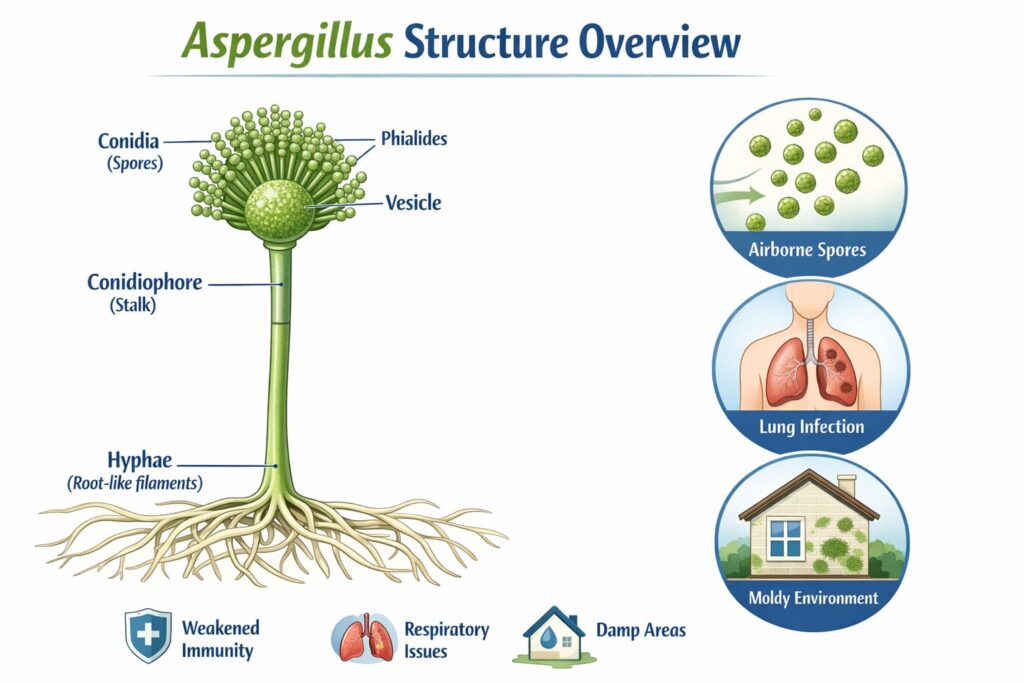
Labeled diagram of Aspergillus mold structure showing how airborne spores can affect the lungs and cause aspergillosis in high-risk individuals.
Aspergillus spores are microscopic airborne particles that can enter the lungs through breathing. Additionally, when these spores grow inside sensitive or immunocompromised people’s lungs, due to that lung infection can develop. Also, these infections range allergic reactions to a severe fungal disease, which is medically called aspergillosis.
Who Is Most at Risk?
- Indeed, people with weakened immune systems are vulnerable targets
- Cancer and chemotherapy patients
- Organ transplant recipients
- Asthma, COPD, or cystic fibrosis patients
- Long-term corticosteroid users
- Individuals living in homes that are water-damaged or mold-infested
Prevention: How to Avoid Aspergillus Exposure
Relax, we are presenting below the steps to prevention:
- Ensure to keep indoor humidity below 50%
- Fix water leaks promptly.
- Use professional mold remediation services.
- Always clean HVAC systems regularly
- Avoid construction areas if immunocompromised.
When Should You See a Doctor?
Immediately, seek medical care if you experience:
- Coughing up blood
- Severe breathing difficulty
- Persistent fever with weak immunity
- Rapidly worsening respiratory symptoms
Conclusion
Aspergillus is a widespread mold that most people encounter daily, but for vulnerable individuals, it can become a serious health threat. Indeed, the real danger lies not just in the fungus itself, but in prolonged indoor exposure caused by hidden moisture, poor ventilation, and untreated mold growth. Understanding Aspergillus helps, but prevention and environmental control are what truly reduce risk. Know that, if your home or workplace has water damage, musty odors, or recurring mold issues, professional intervention is critical. Miami Mold Specialists provides expert mold inspection, testing, and remediation services designed to identify Aspergillus at the source and eliminate it safely. Importantly, addressing indoor mold promptly protects your health, improves air quality, and prevents future fungal exposure before it turns into a medical concern.