





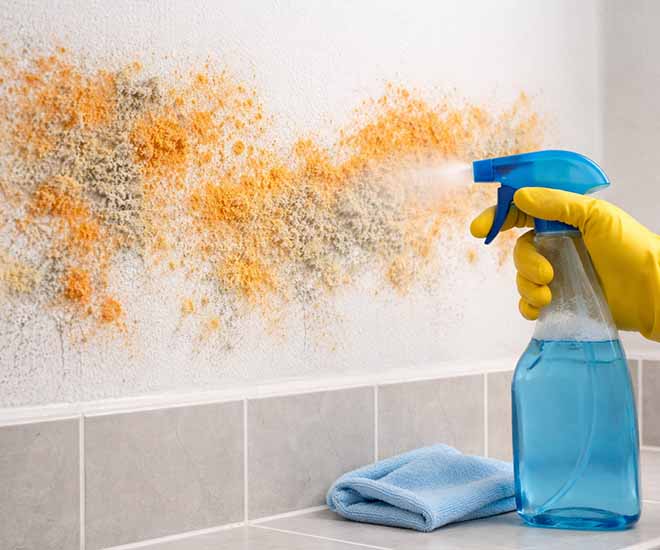
Orange mold on walls is more than just an ugly stain. It is a clear warning sign of excess moisture, poor ventilation, and potential health risks inside your home. If you searched for how to get rid of orange mold on walls, this guide will give you a clear, step-by-step, medically and technically accurate answer, while also covering every related concern homeowners usually have.
You don’t need to read any other guides or articles after reading this guide. Rest assured, it covers all the questions people often ask regarding this topic and related topics.
What Is Orange Mold on Walls?
Before discussing the method “how to get rid of orange mold on walls,” we have to learn about what is orange mold. Certainly, orange mold is not a single species. Simply, it is a general term used to describe several fungi and fungi-like organisms that appear orange, yellow-orange, or rusty in color. On walls, orange mold usually grows on paint, drywall paper backing, wood studs, wallpaper glue, or dust layers.
To simplify, common orange mold types include:
- Powdery orange mold (often Aspergillus or Epicoccum)
- Acremonium species on damp drywall
- Orange slime mold (less common indoors, but possible in very humid homes)
Clearly, the key issue is not the color; it’s the moisture problem feeding the growth.
What Causes Orange Mold on Walls?
Indeed, this is one of the most searched questions:
What causes orange mold on walls?
Orange mold grows when three conditions exist at the same time:
Excess Moisture (Primary Cause)
- Leaking pipes inside the walls
- Roof leaks are soaking the drywall.
- Bathroom steam without ventilation
- Condensation on cold walls
- Flooding or water damage
Organic Material (Food Source)
- Drywall paper backing
- Paint dust and household dirt
- Wood framing behind walls.
- Wallpaper adhesive
Suitable Environment
- Humidity above 60%
- Poor airflow
- Temperatures between 15–30°C (59–86°F)
Surely, if you don’t fix the moisture problem, orange mold will always come back, no matter how well you clean it.
Is Orange Mold Dangerous to Humans?
No doubt, this is one of the most critical questions:
Is orange mold dangerous to humans?
Yes, orange mold can be dangerous. Keep in mind, the danger level depends on the species and exposure level.
Health risks include:
- Allergic reactions (sneezing, itchy eyes, skin rashes)
- Respiratory irritation and coughing
- Sinus infections and headaches
- Asthma flare-ups
- Fatigue and brain fog
Some species are more serious:
Aspergillus flavus (can appear orange) produces aflatoxins, which are carcinogenic.
Acremonium can cause infections in immunocompromised individuals.
High-risk groups:
- Children
- Elderly adults
- Pregnant women
- People with asthma or weak immune systems
So if you’re asking, “Is orange mold toxic?”, the correct answer is: it can be, and it should never be ignored.
How to Clean Orange Mold off Walls (Step-by-Step)
How to clean orange mold off walls?
In simple words, the process or method to clean mold off walls depends on the surface type and the size of the affected area.
Important: DIY cleaning is safe only for areas smaller than 1 square meter (10 sq ft).
How to Get Rid of Orange Mold on Walls (DIY Method)
Always remember that your safety is the first priority.
Before you start, wear:
- N95 mask or respirator
- Rubber gloves
- Eye protection (never ignore)
- Old clothing or disposable coveralls
Cleaning Solutions (Choose One)
White Vinegar (Best Natural Option)
- Undiluted white vinegar
- Effective for porous surfaces
Baking Soda (Mild Cases)
- 1 tablespoon baking soda + water
- Good for light orange mold stains
Bleach (Non-Porous Walls Only)
- 1 cup bleach + 10 cups water
- Use only on sealed, painted walls
Ensure, you never mix vinegar and bleach
Step-by-Step Process
- Ventilate the room (open windows, use fans)
- Spray the solution directly on the orange mold.
- Let it sit for 10–15 minutes.
- Scrub gently using a disposable brush or cloth.
- Wipe residue with a damp towel.
- Dry the wall completely.
Certainly, this answers the query properly on how to get rid of orange mold on walls naturally, which many homeowners prefer.
How to Get Rid of Orange Mold on Walls Reddit-Style Advice (Reality Check)
We have notice that homeowners often share personal experiences on online forums like Reddit, where DIY solutions are commonly discussed. Clearly, based on repeated user experiences across home-maintenance discussions, the most frequently mentioned suggestions include:
- You should use white vinegar for surface cleaning
• Utilize dehumidifiers to reduce moisture
• Improving airflow with fans or open windows
However, it’s important to understand the limitations of forum-based advice:
- People post what on these forums is based on personal experience, not professional inspection
• Hidden mold behind drywall is rarely addressed
• Health risks from airborne spores are often underestimated, which is why everyone should not
• Structural moisture damage is commonly overlooked
Simply, if you act upon forum advice, it may help with very small, visible surface mold. However, forum advice should not be relied upon for recurring or widespread orange mold problems.
Orange Mold on Ceiling: What to Do
Orange mold on ceiling usually means three things:
- Roof leak
- Bathroom steam buildup
- Attic condensation
Additionally, ceiling mold spreads faster due to gravity-driven moisture. Remember, if you notice this mold keeps returning, professional inspection is strongly recommended.
Orange Mold in Shower Walls
Indeed, if you claim that mold loves bathrooms, then you might not be wrong. Surely, bathrooms are prime locations for orange mold growth due to constant moisture.
How to remove orange mold in shower:
- Carefully and properly spray vinegar or hydrogen peroxide.
- Scrub grout lines
- Reseal grout after cleaning
- If there is no exhaust fan, then install it, and if you already have one, ensure that you upgrade it.
Orange Mold on Wood: Is It Dangerous?
Is orange mold on wood dangerous?
Straight forward answer is yes. Clearly, wood is porous, meaning mold roots (hyphae) grow deep inside.
How to get rid of orange mold on wood:
- Properly sand the affected area.
- Use vinegar or borax.
- Ensure that you dry it thoroughly.
- Seal the wood surface.
Importantly, if structural wood is affected, DIY cleaning is not enough.
Orange Mold on Carpet
The problem several people experience and therefore demand an answer to: How to get rid of orange mold on carpet?
No doubt, carpet is extremely difficult to fully clean.
Best options:
- Small area: vinegar + deep drying
- Large area: replace carpet
Orange mold spores stay trapped in carpet fibers and padding.
When Should You Call a Professional for Orange Mold?
Should I call a professional for orange mold?
Clearly, if you observe these things then call professionals:
- If the mold attack covers more than 1 square meter
- No matter how much effort you DIY methods but mold keeps coming back
- You smell musty odors inside the walls.
- Mold is inside the HVAC system.
- Anyone in the home is sick.
Professional remediation includes:
- Containment
- HEPA filtration
- Moisture source repair
- Safe removal of contaminated materials
How to Prevent Orange Mold from Coming Back
Beware that mold is a very sneaky and stubborn enemy. Therefore, here are solutions to prevent it:
- Carefully control humidity and keep it 30–50%
- Don’t be lazy and fix all leaks promptly.
- Use exhaust fans for better ventilation.
- Insulate cold walls
- Clean condensation regularly
Prevention is the only permanent solution.
Conclusion
Understanding how to get rid of orange mold on walls ultimately comes down to two things: removing visible growth correctly and eliminating the moisture source that allows it to survive. While small, surface-level patches can sometimes be handled with proper DIY methods. However, recurring or hidden orange mold is a clear sign of a deeper moisture or air quality issue that should not be ignored. In such cases, professional inspection and remediation are the safest and most effective solution. Miami Mold Specialists provides expert mold inspection, testing, and full remediation services. Moreover, these services are designed to identify hidden mold, correct moisture problems, and protect your home and health long term. Hence, if orange mold keeps returning or you’re unsure about the severity, getting professional help is the smartest next step.