





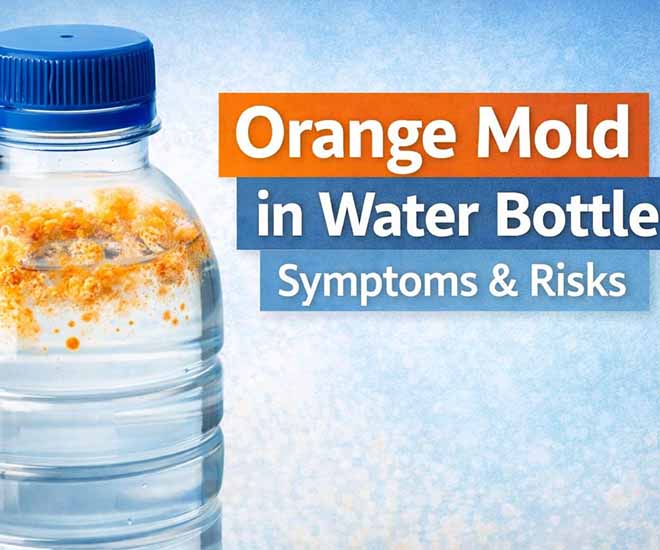
Orange Mold in Water Bottle Symptoms are a growing concern as reusable water bottles become part of everyday life. Indeed, these water bottles are convenient and environmentally friendly. However, the issue arises when they trap moisture, warmth, and organic residue. We already mentioned, in several articles before, that these things help create the perfect environment for mold, bacteria, and biofilm to grow. Additionally, many people only notice the problem after seeing orange or pink residue inside the bottle. On the other hand, some realize after they have already been drinking from it. This naturally leads to worry about possible health effects and whether consuming water from a contaminated bottle can make you sick.
Learn all about: Mold Exposure Symptoms
What Is Orange Mold in a Water Bottle?
Relax a little, the name orange mold is often not true mold. In most cases, the orange or pinkish buildup found in water bottles is caused by:
- Bacteria such as Serratia marcescens
- Biofilm (a slimy layer of bacteria and organic debris)
- Yeast or light fungal growth
Moreover, you can observe that this buildup commonly appears on rubber seals, lids, straws, or at the bottom of the bottle. Importantly, moisture, darkness, and food particles from your mouth accelerate its growth, especially when bottles are not cleaned or dried properly.
Orange Mold in Water Bottle Symptoms
Clearly, the symptoms of orange mold in a water bottle can vary depending on the person. Also, orange mold type of contamination, and how long the exposure lasted. Many people experience no symptoms at all, while others notice mild to moderate reactions.
Common Symptoms Include:
- Nausea
- Upset stomach
- Gas or bloating
- Mild stomach cramps
- Diarrhea
- Sore throat
- Headaches
- Fatigue
- Unusual or unpleasant taste in the mouth
In most cases, these symptoms are temporary and resolve on their own once exposure stops.
While orange mold exposure is usually mild, repeated ingestion can contribute to broader health issues. Therefore, if you are looking for a deeper breakdown of serious reactions, you can also read our detailed guide on 10 warning signs of mold toxicity.
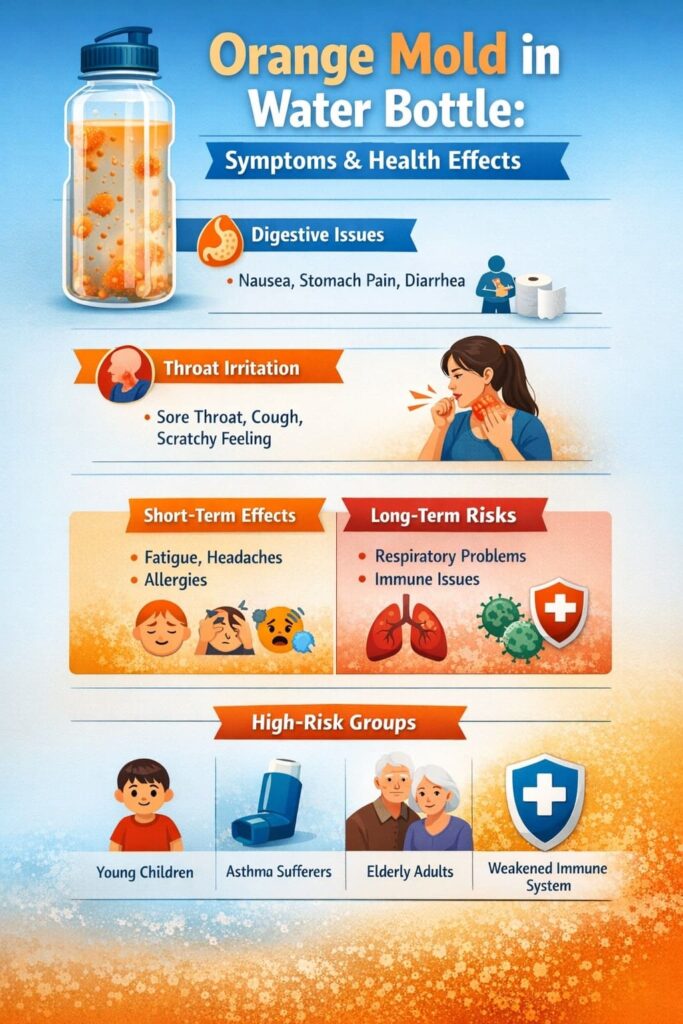
Common orange mold in water bottle symptoms range from digestive issues and sore throat to long-term health risks, especially in high-risk individuals.
Orange Mold in Water Bottle Symptoms Diarrhea
Certainly, diarrhea is one of the most commonly reported symptoms after drinking from a contaminated water bottle. The reason is that bacteria or biofilm irritate the digestive system.
- Mild diarrhea lasting 24–48 hours is usually not serious.
- Severe, persistent diarrhea or diarrhea with fever and vomiting should be evaluated by a healthcare professional.
Note: staying hydrated is especially important if diarrhea occurs.
My Water Bottle Has Mold and I Drank From It – What Should I Do?
Mostly, people search for this one of the most common concerns online. No worries, the good news is that serious illness is rare. However, we are mentioning some things to do promptly under such situations.
Immediate Steps to Take:
- Stop using the bottle immediately.
- Dispose of the bottle or perform a deep cleaning.
- Drink plenty of clean water.
- Monitor your body for symptoms.
- Seek medical advice if symptoms worsen or persist.
Most people feel fine after taking these steps.
Learn all about: Mold Exposure in the Body
I’ve Been Drinking from a Moldy Water Bottle for Months
Surely, if you are exposed to mold for a long time, this exposure can increase the chance of ongoing symptoms, especially for individuals with sensitivities.
Possible long-term symptoms include:
- Chronic sore throat
- Digestive discomfort
- Frequent headaches
- Brain fog
- Fatigue
Certainly, people with asthma, weakened immune systems, children, and older adults may be more affected. Hence, if anybody is dealing with symptoms that have been ongoing for months, professional medical guidance is recommended.
Learn all about: Long-Term Mold Exposure Symptoms
Mold Poisoning from Water Bottle Symptoms
To simplify, you can see the term “mold poisoning” is commonly used online. However, you have to understand that it is not a formal medical diagnosis. People often use it to refer to a collection of symptoms linked to repeated mold or bacterial exposure.
Reported symptoms may include:
- Nausea and vomiting
- Diarrhea
- Dizziness
- Fatigue
- Brain fog
- Skin irritation (rare)
Additionally, it is truth that mycotoxin poisoning from water bottles is extremely uncommon. Nevertheless, repeated exposure should still be avoided.
Mold in Water Bottle Sore Throat
You may be suffering from a sore throat. This illness can occur when contaminated water irritates throat tissues or triggers an allergic response.
- Mild sore throat often resolves once the bottle is replaced.
- Persistent throat irritation may require medical evaluation.
White Mold in Water Bottle vs Orange Mold
Below, we are presenting a piece of essential information in a table form, which makes this data easy to remember and understand:
| Type of Growth | What It Is | Risk Level | Action Required |
|---|---|---|---|
| Orange Mold | Bacteria or biofilm buildup | Low to Moderate | Thorough cleaning or bottle replacement |
| White Mold | Yeast or fungal growth | Moderate | Deep cleaning and seal inspection |
| Black Mold | Certain mold species | Higher | Discard the bottle immediately |
Never ignore any visible growth should be addressed immediately.
Is Black Mold in Water Bottle Dangerous?
Yes, black mold should never be taken lightly as it poses severe health risks. Indeed, not all black-colored growth is toxic mold; it can still pose health risks.
Potential risks include:
- Respiratory irritation
- Allergic reactions
- Headaches
- Immune system stress
Remember, never take such a risk if black mold is visible, the safest and sensible option is to discard the bottle entirely.
Learn all about: Is Black Mold Dangerous
Why Is My Water Bottle Turning Orange?
Common causes include:
- Moisture left inside the bottle
- Infrequent or improper cleaning
- Contaminated rubber seals
- Warm storage environments
- Saliva and food particles are entering the bottle.
How to Remove Mold from Water Bottle Rubber
Certainly, rubber seals and gaskets are the most common hiding spots for mold and bacteria. Rest assured, we are mentioning steps here essential for cleaning your water bottle.
Effective Cleaning Steps:
- Remove the rubber seal.
- Wash with warm water and dish soap.
- Soak in white vinegar for 30–60 minutes.
- Scrub gently with a small brush or toothbrush.
- Rinse thoroughly
- Allow to dry completely.
Importantly, replace the rubber seal promptly if stains or odors remain. Also, replacing the bottle itself is recommended and safe.

Follow these simple steps to safely remove mold from a water bottle rubber seal using soap, vinegar, gentle scrubbing, and proper drying.
Orange Mold in Water Bottle Symptoms Reddit Experiences
In summary, common themes shared by users include:
- Mild stomach upset that resolved quickly.
- Noticing contamination after months of use
- Rubber seals are the main problem area.
- Replacing the bottle the solved ongoing symptoms.
Straightforwardly, these a bit different experiences are point towards the importance of early detection and regular cleaning.
FAQ:
The often asked questions by people are answered here:
Can Orange Mold Make You Sick?
Yes, orange mold or bacterial buildup can cause mild illness, particularly digestive or allergic symptoms. Serious illness is uncommon.
Can You Get Sick From Mold in a Water Bottle?
Yes, additionally, the issue can become more difficult if especially when you are repeatedly exposed with this mold. Most symptoms are short-term, but ongoing exposure increases risk.
What Are the 10 Warning Signs of Mold Toxicity?
- Chronic fatigue
- Brain fogs
- Digestive problems
- Headaches
- Sinus congestion
- Sore throat
- Skin rashes
- Mood changes
- Respiratory irritation
- Frequent infections
How to Prevent Mold in Water Bottle
These are steps that can help you in prevent mold:
- Rinse daily with warm water.
- Wash thoroughly at least once a week.
- Remove and clean rubber seals regularly.
- Allow bottles to dry completely.
- Avoid storing bottles with liquid inside for long periods.
Also, replace old or damaged bottles
Conclusion
In summary, Orange Mold in Water Bottle Symptoms are usually linked to bacterial or biofilm contamination rather than true toxic mold, but they should never be ignored. No matter, while many people experience only mild digestive or throat irritation. However, repeated exposure or ongoing symptoms may indicate a larger mold-related issue beyond just a water bottle. Hence, if you notice persistent health symptoms, unexplained reactions, or suspect mold exposure in your home or workplace, professional evaluation becomes essential. Miami Mold Specialists offer expert mold inspection, testing, and remediation services. Additionally, these solutions are used to identify hidden mold sources and protect your health. Clearly, when it comes to mold exposure, whether from everyday items or indoor environments, early action and professional support can make all the difference.