




The 10 warning signs of mold toxicity in dogs are something every responsible pet owner should understand. Especially those pet owners who live in a damp, humid, or water-damaged home. Moreover, taking mold inside your house as just a structural issue can be the wrong approach. The reason is that, this mold not only damages your property but also can silently damage your dog’s lungs, nervous system, skin, and digestive health.
Carefully observe your pet if it has been vomiting, shaking, coughing, or acting strangely; mold toxicity may be the hidden trigger. Certainly, dogs are an easy target for mold because they sniff floors, lick contaminated surfaces, and spend more time indoors than humans. Hence, the dogs became more vulnerable. As we mentioned above, all these activities by dogs increase their exposure to dangerous mold spores and mycotoxins.
In this in-depth guide, you’ll learn:
- The 10 warning signs of mold toxicity in dogs
- Black mold symptoms in dogs
- Mold poisoning in dogs symptoms vs allergies
- Mold toxicity in dogs: treatment options
- How to treat mold exposure in dogs naturally (safe, supportive methods)
- Whether mold in a house can make a dog sick
- How to detox a dog from mold exposure
- When mold becomes fatal (“mold killed my dog” cases explained)
Let’s start with the most important signs you should never ignore.
What Is Mold Toxicity in Dogs?
Clearly, mold attacks a dog when it inhales or ingests mold spores or toxic byproducts called mycotoxins. As a result, Mold toxicity occurs in dogs. Also, some molds produce potent neurotoxins that affect the brain, lungs, gut, and immune system.
Here are the common household molds:
- Aspergillus
- Cladosporium
- Stachybotrys chartarum
Indeed, black mold poisoning in dogs is especially concerning because certain strains release tremorgenic toxins that affect the nervous system.
Dogs may be exposed through:
- Damp basements
- Moldy dog food
- Compost piles
- Wet bedding
- Flood-damaged homes
Now let’s examine the symptoms.
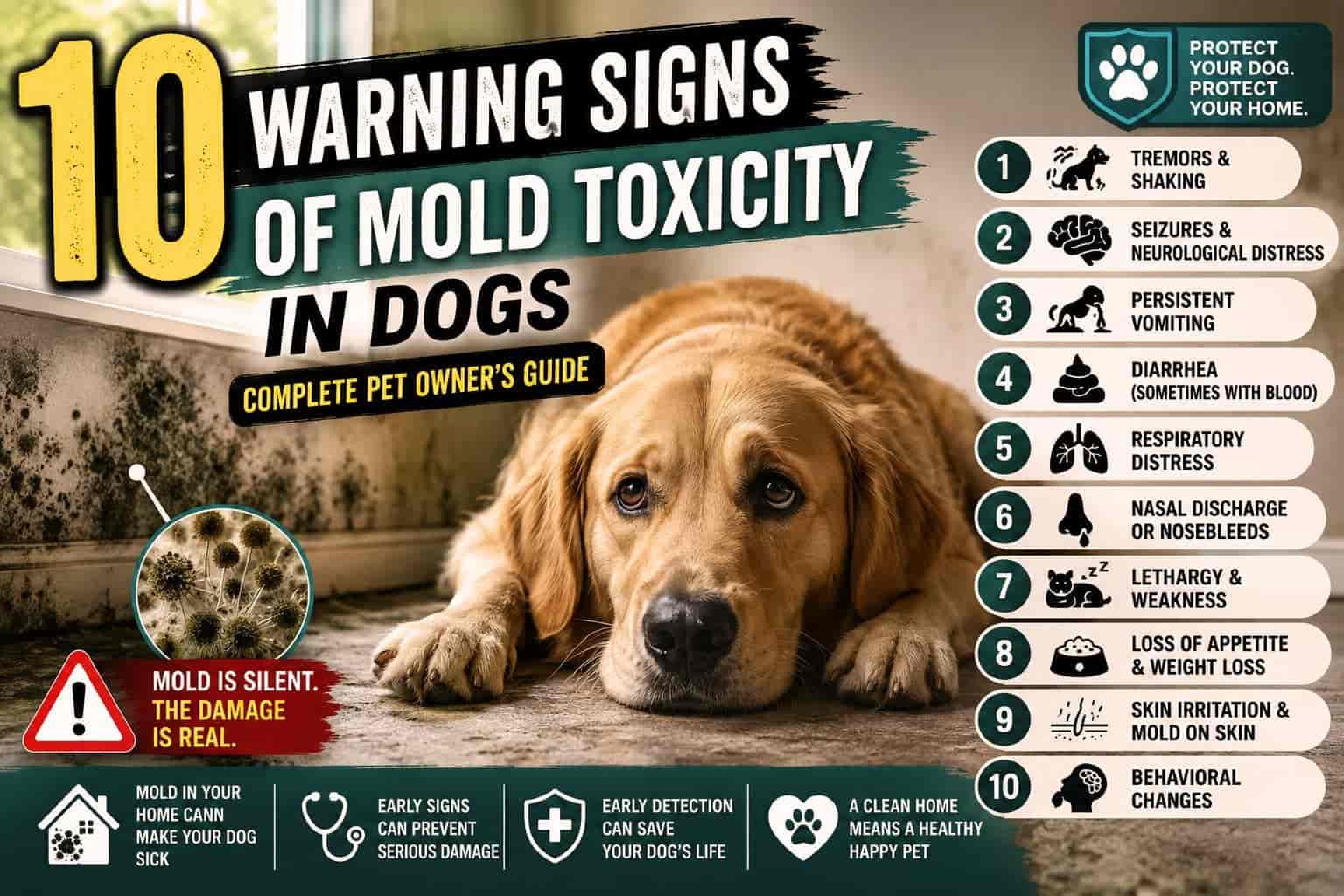
10 Warning Signs of Mold Toxicity in Dogs
Certainly, below we are presenting the most common and dangerous symptoms reported in veterinary cases.
1. Tremors and Uncontrolled Shaking
Clearly, this sign is one of the strongest warning signs. Dogs exposed to tremorgenic mycotoxins may develop:
- Muscle twitching
- Body tremors
- Jaw chattering
- Rigid limbs
Surely, your dog will experience this when mold toxins overstimulate the nervous system.
Emergency level: High. Seek immediate veterinary care.
2. Seizures and Neurological Distress
In case any dog is suffering from severe mold poisoning, then you will see these symptoms, which include:
- Full seizures
- Loss of coordination
- Disorientation
- Sudden collapse
Importantly, take this issue seriously and never neglects as long-term black mold poisoning in dogs can cause permanent neurological damage if untreated.
3. Persistent Vomiting
Notably, observe your dog and if you see it suddenly vomits repeatedly, especially after eating from trash or compost, mold ingestion may be the cause.
Indeed, vomiting is one of the earliest signs of mold poisoning in dogs, and symptoms from contaminated food.
4. Diarrhea (Sometimes With Blood)
Can mold cause diarrhea in dogs?
Yes.
In simple words, mold toxins irritate the gastrointestinal tract, leading to:
- Loose stool
- Bloody stool
- Black tar-like stool (internal bleeding warning)
Immediately, call your vet if the dog’s diarrhea lasts more than 24 hours.
5. Respiratory Distress
Indeed, black mold symptoms in dogs often affect the lungs first.
Therefore, watch for:
- Coughing
- Wheezing
- Sneezing
- Rapid breathing
- Labored breathing
Additionally, dogs with flat faces (brachycephalic breeds) are at even higher risk.
6. Nasal Discharge or Nosebleeds
Although mold spores cause several issues they can also inflame the nasal passages.
Symptoms include:
- Runny nose
- Watery eyes
- Bloody nasal discharge
Always remember, nosebleeds are a red flag for serious exposure.
7. Lethargy and Weakness
If you notice, your active dog suddenly:
- Refuses walks
- Sleeps excessively
- Appears weak
Might be, mold toxicity is responsible, which is suppressing the immune and nervous systems.
8. Loss of Appetite and Weight Loss
Certainly, chronic mold exposure can lead a dog to:
- Refusal to eat
- Gradual weight loss
- Dehydration
Moreover, the above-mentioned these 3 points are especially concerning in puppies and senior dogs.
9. Skin Irritation and Mold on Dog Skin
Look closely, without endangering yourself, mold allergy symptoms often appear on the skin.
Look for:
- Excessive scratching
- Red patches
- Dry scaly skin
- Hair loss
- Yeasty odor
Mold on dog skin can develop if bedding stays damp.
10. Behavioral Changes
Beware, toxins affect the brain.
You may notice:
- Anxiety
- Restlessness
- Irritability
- Confusion
Often, behavioral changes are overlooked. However, these changes are common in mold toxicity in dogs.
Can Mold in a House Make a Dog Sick?
Absolutely, the reason behind this is very clear, dogs spend more time indoors than humans and have:
- Closer contact with floors, especially with highly moldy floor
- Higher inhalation rates per body weight
- Frequent surface licking
If your home has:
- A musty smell
- Water damage
- Visible mold
- Humidity above 50%
Clearly, your dog is at risk.
Black Mold Symptoms in Dogs vs Mold Allergies
Often, you find a misconception about reactions from mold. So, understand that not all mold reactions are poisonous.
| Mold Allergy | Mold Toxicity |
|---|---|
| Itchy skin | Tremors |
| Sneezing | Seizures |
| Mild coughing | Persistent vomiting |
| Seasonal flares | Sudden severe illness |
Allergies are immune reactions. On the other hand, toxicity involves mycotoxins damaging organs.
Mold Toxicity in Dogs Treatment (Veterinary Approach)
Promptly, if you suspect in your dog has mold exposure, take these steps:
- Remove the dog from the contaminated area immediately.
- Prevent further ingestion
- Visit a veterinarian urgently.
To make it simpler, treatment may include:
- IV fluids
- Activated charcoal
- Anti-seizure medication
- Oxygen therapy
- Anti-inflammatory drugs
Good news, early mold toxicity in dogs treatment greatly improves survival chances.
How to Detox a Dog From Mold Exposure
Always remember, detox must be supervised by a vet.
However, after stabilization, supportive strategies may include:
- Clean filtered water
- High-quality toxin-free diet
- Liver support supplements (vet-approved)
- Probiotics
- Anti-inflammatory nutrition
Keep in mind, never attempt aggressive detox at home without guidance. Otherwise, it may lead to disastrous results.
How to Treat Mold Exposure in Dogs Naturally (Supportive Only)
Take it very seriously; natural support is NOT a replacement for veterinary care.
Additionally, once cleared by a vet, you may provide only good support recovery with:
- Omega-3 fatty acids (reduce inflammation)
- Milk thistle (liver support)
- Air purification in home is mandatory
- Dehumidifiers (30–50% humidity range)
- Regular washing of bedding
Without a doubt, prevention is more powerful than treatment.
Can Mold Cause Croup?
In dogs, mold can cause airway inflammation similar to croup-like symptoms:
- Barking cough
- Swollen throat
- Breathing difficulty
Clearly, True croup is more common in children. However, mold-induced airway irritation can resemble it.
Mold Killed My Dog — Can Mold Be Fatal?
Indeed, yes.
Simple explanation, severe ingestion of moldy food (especially compost tremorgenic toxins) can cause:
- Rapid seizures
- Organ failure
- Death within 24–72 hours (if untreated)
Surely, you can prevent these tragic cases as they are often preventable with early intervention.
Mycotoxins in Dog Food
Importantly, today there are studies that are showing dry pet food may contain fungal contaminants, including:
- Fusarium
- Penicillium
Note: Certainly, improper storage increases contamination risk.
Therefore, always store dog food:
- In airtight containers
- In cool, dry areas
- Away from moisture
How to Treat Mold Exposure in Cats
Keep that in mind, cats experience similar symptoms:
- Vomiting
- Respiratory distress
- Neurological signs
If you are an owner of multiple pets showing symptoms, investigate environmental mold immediately.
How to Prevent Mold Toxicity in Dogs
Below we are presenting the steps you can use prevent mold toxicity in dogs:
Keep indoor humidity between 30–50%
- Fix leaks immediately
- Clean spills quickly
- Wash bedding weekly
- Keep compost sealed
- Never allow access to trash.
- Inspect dog food before feeding.
- Use HEPA air filtration.
Surely, if your home has a water damage history, consider professional mold testing.
When to See a Vet Immediately
Certainly, never neglect your responsibility for your pet. Hence, seek emergency care if your dog has:
- Tremors
- Seizures
- Bloody stool
- Severe breathing difficulty
- Continuous vomiting
Notably, time matters in mold poisoning cases.
Conclusion
Recognizing the 10 warning signs of mold toxicity in dogs can mean the difference between early recovery and a life-threatening emergency. Also, mold isn’t just a household nuisance; it’s a silent enemy that can harm your pet’s health and your home’s safety. Moreover, if you suspect mold contamination or notice unusual symptoms in your dog, act quickly. Immediately, schedule a professional inspection with Miami Mold Specialists, experts in detecting and eliminating hidden mold from homes. Additionally, their advanced remediation techniques not only protect your property but also ensure your pet breathes clean, safe air again. Therefore, don’t wait for the damage to worsen; restore a healthy environment for both you and your loyal companion today.