





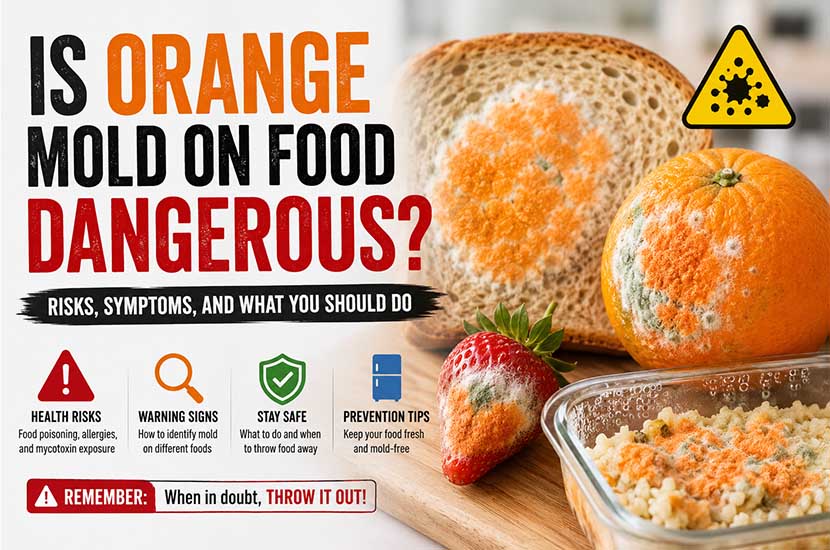
Do you hear anyone asks questions like Is Orange Mold on Food Dangerous? Moreover, have you noticed orange mold growing on bread, fruit, cheese, or leftovers and wondered whether it’s safe to remove the moldy part and eat the rest? Importantly, several people assume that orange mold is less harmful than black mold. However, this is a very dangerous misconception. Certainly, the short and simple answer is yes, orange mold on food can be dangerous. Indeed, not every orange-colored mold produces toxins. Nonetheless, many mold species can spread invisible threads deep into food long before the orange growth appears on the surface. Furthermore, eating contaminated food may lead to food poisoning, allergic reactions, digestive problems, or even exposure to harmful mycotoxins in certain cases. In this guide, you’ll learn:
- Is orange mold on food dangerous?
- Will orange mold make you sick?
- Is it okay to eat an orange with a little mold?
- Is food mold dangerous to breathe?
- How to safely handle moldy food
- Which foods must always be thrown away?
- How to prevent mold from returning
Let’s start with the most important question.
Quick Answer: Is Orange Mold on Food Dangerous?
Yes, orange mold on food is dangerous in most situations. Crucially, never take any risk with soft foods such as oranges, bread, berries, yogurt, cooked meals, and soft cheese. Notably, mold spreads far beneath the visible surface in soft foods. Hence, the moldy soft foods should be thrown away immediately. Clearly, if you only see a small orange patch, microscopic mold filaments may have already contaminated the entire food. Most importantly, not all orange molds may produce mycotoxins, harmful compounds. Evidently, these dangerous orange molds can trigger allergic reactions, stomach upset, vomiting, diarrhea, or more serious health concerns in vulnerable individuals. According to the USDA, soft foods with mold should never be eaten because cutting away the visible mold does not remove hidden contamination.
- Bottom Line: If you see orange mold on food, the safest option is to throw the entire item away.
What Is Orange Mold on Food?
Keep in mind that orange mold is not something that you easily identify as a single type of mold. Instead, it’s a general description of several fungi that develop an orange, peach, salmon, or yellow-orange appearance during growth. Hopefully, you are aware of the fact that molds thrive in warm and damp environments. Similarly, orange mold also grows in such conditions, and these are ideal places where organic matter is available as food for orange mold. Common places where orange mold appears include:
- Citrus fruits
- Bread
- Cooked rice
- Leftovers
- Soft cheese
- Yogurt
- Jam
- Fresh vegetables
- Refrigerators with excess moisture
Unlike bacteria, mold grows using tiny thread-like structures called hyphae. Consider this: these microscopic roots penetrate deep inside food, often long before any discoloration becomes visible. That’s why simply scraping off the mold usually isn’t enough.
Why Does Orange Mold Grow on Food?
Importantly, mold spores exist naturally in the air around us. Crucially, the real problem starts when mold spores floating in the air land on food under the right conditions; they begin growing rapidly. The biggest causes include:
High Moisture
Most commonly, orange mold loves humid conditions, as they are ideal for it to thrive. Hence, foods with high water content, such as oranges, strawberries, tomatoes, and leftovers, are especially vulnerable.
Warm Temperatures
Certainly, it can be a big mistake on your part if you leave food at room temperature for several hours. Simply, it provides a mold with a perfect chance to multiply.
Poor Storage
Clearly, any improperly sealed container allows airborne mold spores to settle on food.
Expired Food
As food ages, its natural defenses weaken. As a result, all this makes mold growth much easier.
Damaged Produce
Bruised or cut fruits develop mold significantly faster because the protective skin has already been broken.
Is Orange Mold Dangerous in Food?
Sadly, if you are one of those people who believe orange mold simply spoils food without causing illness, you are very wrong. Unfortunately, that’s not always true. In fact, there are several health risks that are associated with eating moldy food.
1. Hidden Contamination
Indeed, the people think that by only removing the visible orange patch, the food is now safe to eat. However, they completely remain unaware that microscopic roots may have already spread throughout the food. This is especially dangerous in:
- Bread
- Soft fruits
- Cakes
- Leftovers
- Cooked vegetables
Notably, even if most of the food looks normal, contamination may already be widespread.
2. Mycotoxin Exposure
Certain mold species produce toxic chemicals called mycotoxins. Keep in mind, these dangerous toxins may remain inside food even after the visible mold is removed. No doubt, not all types of orange mold produce mycotoxins. However, it is nearly impossible to identify dangerous species just by looking at their color.
3. Food Poisoning
Unfortunately, many people take it lightly and eat food items after only removing the visible portion. Evidently, the negligence of eating moldy food may cause:
- Nausea
- Vomiting
- Diarrhea
- Stomach cramps
- Loss of appetite
Notably, the affected person often faces symptoms within several hours. Nonetheless, the appearance of symptoms may vary depending on the person’s health and the amount consumed.
4. Allergic Reactions
Be cautious: people with mold allergies may experience:
- Sneezing
- Runny nose
- Itchy eyes
- Skin rash
- Wheezing
- Coughing
Additionally, for patients with asthma, symptoms may become significantly worse.
Will Orange Mold Make You Sick?
Yes, it can. However, the severity depends on several factors. These include:
- The type of mold
- The amount eaten
- Your immune system
- Your age
- Whether toxins are present
For instance, if a healthy adult mistakenly or accidently eats a tiny amount of a moldy food item, they may experience only mild digestive discomfort. In contrast, if you are a child, an older adult, pregnant, and people with weakened immune system, then the case will differ. Most probably, they face a much higher risk of developing more serious complications. Ensure you seek medical attention immediately if you develop:
- Persistent vomiting
- Bloody diarrhea
- High fever
- Difficulty breathing
- Severe dehydration
- Confusion
- Chest tightness
Is It Okay to Eat an Orange With a Little Mold?
No. Interestingly, this is one of the most common questions people ask. No matter if you are seeing that only one small area may appear moldy. Keep in mind, oranges are classified as soft fruits. Indeed, oranges have high moisture content. Pay attention to how mold targets soft food items; mold spreads far beneath the peel before becoming visible. That’s why cutting away the moldy section does not resolve anything, as hidden contamination still remains. Notably, the safest option is to throw away the entire orange.
Mold on Orange Peel: Is It Safe?
A common misconception is that people think the peel protects the fruit inside. Unfortunately, the peel cannot provide proper protection against mold, as it often enters through tiny cracks or bruises in the peel. Once inside, microscopic growth continues unnoticed. If you notice:
- Orange fuzz
- White fuzz
- Green spots
- Soft areas
- Bad smell
- Leaking juice
Because of this, it is best to discard the entire fruit. Rather, you should try to taste it. Do not taste it to check whether it’s still good.
Is Green Mold on Oranges Dangerous?
Undoubtedly, Yes. Simply put, green mold is commonly seen on citrus fruits and should be treated exactly the same as orange mold. It makes no difference; the color of both molds differs. The important thing is, both indicate fungal contamination. Never assume green mold is safer than orange mold. Clearly, if you have an orange that develops green mold:
- Throw it away immediately.
- Check nearby oranges for early signs of mold.
Additionally, once you get rid of contaminated oranges, ensure washing the storage container before adding fresh fruit.
Is White Fuzzy Mold on Food Dangerous?
Absolutely, the answer is yes. Often, people mistakenly believe white mold is harmless because it appears “clean.” In reality, white fuzzy mold is usually simply an early stage of mold growth. As colonies mature, they may change into:
- Orange
- Green
- Blue
- Gray
- Black
Hence, it is not possible for you to identify mold species by color alone. Thus, the best solution is that any fuzzy mold on soft food should be treated as unsafe. Therefore, the safest choice is disposal.
Is Food Mold Dangerous to Breathe?
Usually, brief exposure won’t harm healthy individuals. Keep in mind, we are saying healthy people, not people with allergies or weak immune systems. Notably, breathing mold spores may trigger symptoms in sensitive people. These include:
- Sneezing
- Coughing
- Nasal congestion
- Eye irritation
- Wheezing
- Asthma flare-ups
Thus, always avoid smelling moldy food closely. Instead, place it directly into a sealed bag before throwing it away to prevent the spread of airborne spores.
Should You Cut Away the Mold or Throw Away the Whole Food?
Simply put, this is not the decision you should make based on the size of moldy spot on food. Rather, it depends on the type of food. To be clearer, the USDA recommends discarding soft, high-moisture foods because mold spreads beneath the surface where you can’t see it.
| Throw Away Immediately | May Sometimes Be Salvaged |
|---|---|
| Bread | Hard cheese (cut at least 1 inch around mold) |
| Oranges | Hard salami |
| Berries | Firm carrots |
| Yogurt | Bell peppers |
| Jam | Cabbage |
| Soft cheese | Hard vegetables |
| Leftovers | — |
As a general rule, if the food is soft or contains a lot of moisture, don’t risk eating it.
Powdery Orange Mold: What Does It Mean?
Beware: if any individual notices a powdery orange mold growth on food, don’t assume it’s just dried seasoning or harmless discoloration. Powdery orange mold is usually an active fungal colony releasing millions of microscopic spores into the surrounding air. As the mold matures, it often changes from a smooth patch into a fuzzy or powder-like texture. Furthermore, this powder contains mold spores that can easily spread to nearby foods, kitchen surfaces, and storage containers. Common places where powdery orange mold develops include:
- Bread
- Citrus fruits
- Tomatoes
- Cooked pasta
- Rice
- Leftovers
- Soft cheeses
Most importantly, never use a brush or try to directly wipe away powdery mold before disposal. Otherwise, the powdery mold can release spores into the air. Instead, place the food directly into a sealed plastic bag before throwing it away.
What Happens If You Accidentally Eat Orange Mold?
Relax, accidentally eating a small amount of orange mold doesn’t always mean you’ll become seriously ill. In many healthy adults, no symptoms develop at all. Still, other people may experience mild digestive discomfort, but that is nothing serious. Simply, it will resolve within a day. However, this is not the thing that happens every time. To simplify, reactions vary depending on several factors, including:
- The mold species
- Whether mycotoxins are present
- The amount consumed
- Your immune system
- Your overall health
Also, possible symptoms include:
- Nausea
- Vomiting
- Diarrhea
- Stomach cramps
- Bloating
- Loss of appetite
More importantly, people with mold allergies may also experience:
- Sneezing
- Itchy eyes
- Runny nose
- Wheezing
- Coughing
Note: If symptoms become severe or continue for more than 24 hours, contact a healthcare professional immediately.
If your concern involves mold inside a reusable bottle rather than spoiled food, learn about Orange Mold in Water Bottle Symptoms and the steps you should take after drinking from a contaminated bottle.
Who Is Most at Risk?
Honestly, contaminated food is dangerous and can affect anyone. Still, certain groups are much more vulnerable. These include:
- Young children
- Older adults
- Pregnant women
- People with asthma
- Individuals with weakened immune systems
- Cancer patients receiving chemotherapy
- Organ transplant recipients
For these individuals, even a small amount of contaminated food consumption may lead to more serious illness.
How to Get Rid of Orange Mold
Many people search for how to get rid of orange mold, expecting that cleaning the visible mold will make the food safe again. Unfortunately, once mold grows on food, there is no safe way to remove it in most cases. Instead, follow these steps.
1. Throw Away the Food
Crucially, first of all, place all the moldy food into a sealed plastic bag before putting it in the trash. Otherwise, the mold spores will spread. This helps prevent spores from spreading throughout your kitchen.
2. Clean Nearby Surfaces
Secondly, prevent contamination of fresh food by properly cleaning after disposing of the food:
- Wash countertops with hot, soapy water.
- Disinfect food storage containers.
- Clean refrigerator shelves.
- Wipe fruit drawers.
3. Check Nearby Food
Promptly inspect all the fruits, vegetables, bread, and leftovers placed near the contaminated food. The reason mold spreads easily and quickly. Particularly, the food items inside refrigerators as foods are stored close together. Immediately discard anything showing even small signs of mold growth.
4. Control Moisture
Certainly, excessive and out-of-control-moisture acts as a severe enemy in the case of mold, as it thrives in damp environments. Thus, to reduce future growth:
- Refrigerate perishable foods promptly.
- Keep refrigerators clean.
- Store produce in breathable containers.
- Avoid leaving leftovers at room temperature for more than two hours.
If orange mold is growing on walls, ceilings, or drywall rather than food, our detailed guide on How to Get Rid of Orange Mold on Walls explains safe DIY cleaning methods, when professional remediation is needed, and how to stop mold from returning.
Orange Mold vs Green Mold vs White Mold
A common misconception is that people assume the color of mold determines how dangerous it is. However, that’s not true. The truth is, the color of a mold simply reflects the mold species or its stage of growth.
| Mold Color | Safe to Eat? | Common Risk |
|---|---|---|
| Orange | ❌ No | Food contamination, possible mycotoxins |
| Green | ❌ No | Spoilage and fungal contamination |
| White Fuzzy | ❌ No | Often an early stage of mold growth |
| Black | ❌ No | Some species may produce harmful toxins |
| Blue | ❌ No | Common on bread, cheese, and fruit |
The safest rule is simple: If mold is growing on soft food, throw it away regardless of its color.
Is Orange Mold on Wood Dangerous?
Although this article focuses on food, many readers also ask whether orange mold on wood is dangerous. Yes, it can be. Additionally, the growth of orange mold on wood usually indicates excessive moisture inside the building. Besides damaging wooden structures over time, mold may release airborne spores that trigger allergies and respiratory irritation. If orange mold repeatedly appears on wood, drywall, or other building materials, the underlying moisture problem should be identified and corrected. Large indoor mold infestations often require professional inspection and remediation.
If you’re dealing with orange mold on wooden cabinets, furniture, framing, or other wooden surfaces instead of food, read our complete guide on Is Orange Mold on Wood Dangerous to learn about the health risks, warning signs, and the safest removal methods.
How to Prevent Orange Mold on Food
Surely, preventing mold needs some effort, but it is far less difficult than dealing with spoiled food. Follow these simple tips:
Refrigerate Perishable Foods
Utilize your refrigerator and store fruits, vegetables, dairy products, and leftovers promptly.
Check Produce Regularly
Above all, perform this step of removing damaged or moldy fruit immediately. In case of laziness, the mold will spread to healthy produce before you know it. Consequently, all your effort will be wasted.
Keep Your Refrigerator Clean
Specifically, clean all spills ASAP and wipe shelves of the refrigerator regularly.
Store Food Properly
Keep in mind, always use proper airtight containers for leftovers. Also, follow recommended storage times.
Avoid Buying More Than You Need
Never buy more than requirement as fresh produce lasts longer when consumed quickly. In contrast, buying excessive quantities often results in unnecessary spoilage.
Frequently Asked Questions
Certainly, almost all these questions are addressed in detail above. However, here we are with the short and precise answers:
Is orange mold dangerous in food?
Yes. The orange mold on your food items indicates fungal contamination. More importantly, mold spreads beneath the surface of soft foods. Thus, the safest option is to discard the entire item.
Will orange mold make you sick?
Indeed, it can. Some people develop nausea, vomiting, diarrhea, stomach cramps, or allergic reactions after consuming moldy food. However, asthma patients, individuals with mold allergies, older people, and children are more vulnerable.
Is it okay to eat an orange with a little mold?
The answer is not at all. Keep in mind, oranges are soft fruits with high moisture content, allowing mold to spread deep inside the fruit even if only a small spot is visible.
Is green mold on food dangerous?
Yes. Unfortunately, there are people who assume green mold is less dangerous. The opposite of that, green mold also indicates fungal contamination and should be treated the same way as orange mold.
Is white fuzzy mold on food dangerous?
Straightly, the response to this question is yes. White fuzzy mold is often an early stage of mold growth. Nevertheless, it’s impossible to identify mold species by color alone. Hence, you should always get rid of moldy soft foods.
Can you cut mold off food and still eat it?
This rule can only be applied to certain hard, low-moisture foods such as hard cheese or hard salami. You may sometimes be salvaged by cutting at least one inch around the mold on these hard foods. However, there is no compromise when it comes to food soft foods; they should always be thrown away.
Can breathing mold from food make you sick?
For most healthy people, brief exposure causes little or no harm. However, mold spores can trigger allergies, asthma attacks, coughing, sneezing, and eye irritation in sensitive individuals.
Conclusion
So, is orange mold on food dangerous? In most cases, yes. Simply put, mold can spread beneath the surface of soft foods long before it becomes visible. Hence, the safest decision is to discard contaminated items instead of trying to remove the moldy portion. Consider this: taking this simple precaution can help reduce the risk of foodborne illness, allergic reactions, and unnecessary exposure to harmful mold spores. However, if you repeatedly notice mold growth on food despite proper storage, the issue may be excessive indoor humidity or hidden mold contamination within your home. In that case, the experienced team at Miami Mold Specialists can help. From comprehensive mold inspections to professional mold testing and remediation, they identify the root cause of persistent mold problems and restore a healthier indoor environment for you and your family.